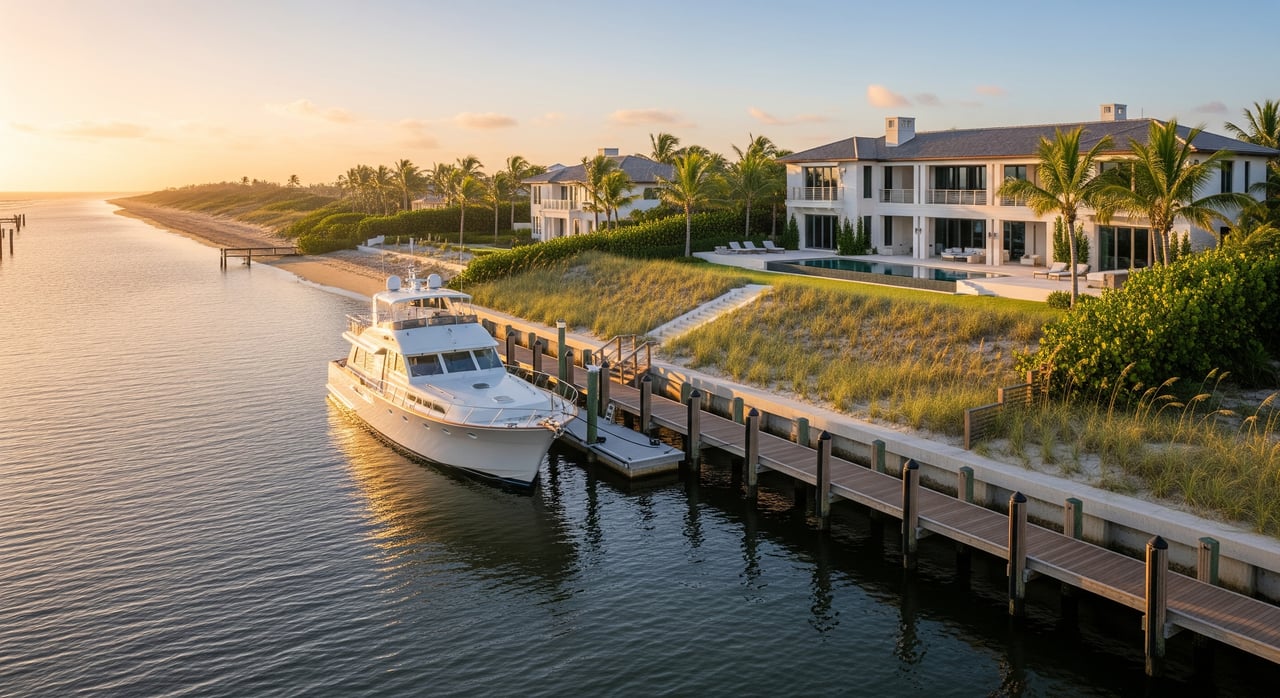
Is your ideal day a sunrise walk on a quiet beach, a midday cruise along sheltered waterways, and a sunset viewed from a private terrace? If you are drawn to privacy, beauty, and time on the water, Jupiter Island delivers a rare mix of simplicity and sophistication. You want to understand how boating works here, what the beaches are like, and how the island’s privacy standards shape daily life. This guide walks you through the essentials so you can move forward with clarity and confidence. Let’s dive in.
Where Jupiter Island sits on the map
Jupiter Island is a slender barrier island in Martin County with the Atlantic Ocean to the east and the Intracoastal Waterway to the west. You access open ocean through nearby inlets that connect the ICW to the Atlantic. The setting is defined by natural dunes, long beachfront, and low-density residential streets.
Much of the island is within the incorporated Town of Jupiter Island, with some parcels under Martin County jurisdiction. Local regulations prioritize dune protection, setbacks, and exterior-lighting standards that preserve the coastline’s character and night sky. The result is a serene, low-visual-density environment that feels secluded yet connected to neighboring communities.
Boating and yachting: everyday access
If boating is central to your lifestyle, the ICW along the island’s western edge is your daily thoroughfare. It offers protected cruising north and south, with ocean runs via local inlets such as Jupiter Inlet. Inlet conditions can change with seasonal shoaling and storms, so advance planning is part of the rhythm here.
For safe passage, rely on official resources. Review current charts through NOAA nautical charts and confirm conditions with NOAA tides and currents. Tidal flow at inlets can be strong, so you plan your runs with tides, bridge clearances, and draft in mind.
Many owners keep vessels at marinas or private slips on the mainland side in nearby communities. Larger yachts often look to regional ports for haul-out, service, and provisioning depending on vessel size. Before finalizing a plan, verify slip availability, waitlists, maximum vessel lengths and drafts, and hurricane procedures with your preferred marina.
Quick boating checklist
- Confirm current inlet conditions and tide windows using official NOAA sources.
- Ask marinas about slip sizes, drafts, fuel availability, and waitlists.
- Verify bridge and channel clearances for your planned routes.
- Review hurricane-season storage and evacuation plans for your vessel.
Beaches and nature: what you experience
Jupiter Island’s beaches feel natural and uncluttered, with dune ridges framing wide stretches of sand. Many properties offer private beachfront, and public access points in the area are more limited than urban beaches. If you are visiting, confirm exact public access locations in neighboring communities before you go through Martin County’s resources.
From roughly May through October, sea turtles nest along this coast, which shapes how you live by the water. Lighting, blinds, and outdoor activity may need adjustment during nesting season to protect hatchlings. For clear, science-based guidance, review Florida Fish and Wildlife Conservation Commission sea turtle guidelines. Expect local lighting rules that reduce disorientation and occasional seasonal restrictions on beachfront activities.
You may also see shorebirds using dunes and tidal zones. Certain areas can be seasonally protected to support nesting and migration. To learn more about federally protected species, check the U.S. Fish & Wildlife Service.
Coastal management and resilience
Coastal shorelines evolve. Jupiter Island experiences erosion and accretion cycles, and periodic beach-nourishment projects help stabilize the shoreline. These projects can temporarily add equipment to the beach and may affect access while work is underway. For statewide program information and permitting context, visit the Florida Department of Environmental Protection coastal program.
As a buyer or owner, plan for coastal best practices. Review flood zones, elevation requirements, and insurance expectations. The FEMA Flood Map Service Center provides official flood designations that inform risk, construction standards, and policy decisions.
The Jupiter Island social rhythm
Life here tends to be low-key and private. Residents value discretion, quiet routines, and time outdoors. You will find daily wellness on the beach, boating and fishing on the ICW, and private gatherings at home. On-island amenities are limited by design, and many clubs, restaurants, cultural venues, and medical services sit a short drive away in nearby Jupiter and the Palm Beach area.
This understated social culture is part of the appeal if you prefer low publicity and relaxed schedules. It also means you plan for self-sufficiency at home and enjoy the convenience of top-tier services nearby rather than on your doorstep.
Privacy and property norms
Privacy is a defining feature of Jupiter Island. Many estates are gated, with generous setbacks and layered landscape buffers. Nighttime lighting is controlled, and homeowners pay close attention to dune protection and exterior design choices that blend with the natural setting. If you are considering aerial photography or drone use, confirm local ordinances before flying and be mindful of neighbors.
Transactions can be discreet, and off-market opportunities are more common than in higher-density areas. Whether you are buying or selling, expect a premium on careful scheduling, confidentiality, and presentation that respects community standards.
Buying or selling: what to verify
Before you make a decision, gather facts that shape value, enjoyment, and long-term stewardship. Use this list to guide your early research and due diligence.
- Jurisdiction: Confirm whether a property lies within the Town of Jupiter Island or under Martin County oversight. Rules can differ on setbacks, lighting, and dune work.
- Coastal projects: Ask about any planned beach-nourishment work and dune restoration timelines that could affect access or views.
- Flood and insurance: Pull flood maps from the FEMA Flood Map Service Center and consult insurers who understand Florida coastal risk.
- Construction standards: Review elevation and coastal-building requirements through the Florida Department of Environmental Protection coastal program and local permitting offices.
- Wildlife protections: Plan for sea turtle season lighting and beach-use adjustments by checking FWC sea turtle guidelines.
- Boating logistics: Verify marina options, slip sizes, drafts, fuel, and hurricane procedures. For route planning, rely on NOAA nautical charts and NOAA tides and currents.
- Access and privacy: Map public beach access in the wider area through Martin County and confirm how vegetation, gates, and setbacks support privacy at the property level.
Seasonal tips for boaters and beachgoers
Hurricane season requires a plan. Coordinate with your marina or service provider in advance for storage, haul-out, and evacuation procedures. Keep vessel documentation, lines, chafe gear, and storm covers ready before systems are named. Time inlet runs with tides, and cross-check conditions on official NOAA platforms.
During sea turtle nesting season, adjust exterior lighting and shade beachfront windows at night. Avoid disturbing marked nests, and keep the beach free of furniture or obstacles. Give space to shorebirds and other wildlife, and follow any posted seasonal closures supported by the U.S. Fish & Wildlife Service.
How a local advisor adds value
Navigating Jupiter Island is about more than finding a pretty view. You want a property that fits your boating needs, meets the island’s privacy standards, and is positioned to perform through smart presentation. A design-informed strategy helps you evaluate coastal construction details, anticipate maintenance, and highlight a home’s best features without compromising discretion.
If you are exploring the island or preparing a sale, connect with a boutique team that understands the shoreline, the permitting landscape, and the market’s quiet rhythms. For a confidential conversation about your goals on Jupiter Island, reach out to Susan Turner.
FAQs
What makes boating on Jupiter Island unique?
- You have sheltered ICW cruising, ocean access via nearby inlets, and changeable inlet conditions that you plan around using official NOAA charts and tide data.
Are there public beaches on or near Jupiter Island?
- Public access is more limited than urban shorelines, and many beachfront parcels are private, so confirm nearby access points through Martin County resources before visiting.
What should I know about sea turtle nesting season?
- From roughly May to October, follow lighting rules and avoid disturbing nests; use FWC sea turtle guidance to align your home and beach habits with protections.
How do coastal projects affect daily life?
- Periodic beach-nourishment and dune work help stabilize the shoreline and can temporarily add equipment or limit access; learn more through the Florida DEP coastal program.
How private is day-to-day living on the island?
- The community values discretion, with low-density estates, gating, and landscape buffers that support privacy while keeping amenities and services a short drive away.
Where can I check flood risk for a specific property?
- Use the official FEMA Flood Map Service Center to review flood zones, then consult local building and insurance professionals for requirements and coverage options.