Are you torn between waking up to Atlantic sunrises or docking a sportfishing boat steps from your back patio? On Jupiter Island, both lifestyles are extraordinary, yet each asks you to prioritize different daily joys, ownership costs, and permitting realities. If you want clarity before you write an offer, you’re in the right place. In this guide, you’ll compare oceanfront and Intracoastal living on Jupiter Island, understand the true trade-offs, and get a practical checklist to streamline due diligence. Let’s dive in.
Jupiter Island at a glance
Jupiter Island is a narrow barrier island in Martin County with the Atlantic Ocean to the east and the Indian River/Intracoastal Waterway to the west. Beach Road runs north–south and frames most luxury addresses. The island’s layout creates distinct experiences on each shoreline and shapes how you access the beach, boat, and services. For geographic context, see the overview of Jupiter Island.
The incorporated Town of Jupiter Island oversees local governance and beach protection initiatives. Local policies, permitting, and beach management influence what you can build and how you maintain a property. You can explore the town’s resources on the Town of Jupiter Island site.
Market snapshot and pricing signals
Jupiter Island is an ultra-luxury market. The Zillow Home Value Index for the Town indicates a typical home value around $9.6 million as of late 2025. Trophy properties trade well above that.
Recent examples illustrate the range:
- Oceanfront estate at 338 S Beach Rd closed near $18.9 million.
- A larger oceanfront property at 318 S Beach Rd reported a sale around $23.35 million.
- A substantial Intracoastal parcel at 286 S Beach Rd with dockage and acreage sold near $16.0 million.
What this means for you: direct oceanfront often achieves the highest pricing due to private beach frontage and unobstructed views. That said, large Intracoastal estates with deep water, generous acreage, and robust dockage can approach oceanfront values. With a small number of annual trades, one or two sales can shift averages, so lean on current, property-specific comparables.
Oceanfront living: what to expect
What you’ll love
Direct, private beach access and panoramic Atlantic views define oceanfront life. You hear the surf, watch sunrise over the horizon, and step from your pool terrace to the sand. If daily beach walks and uninterrupted ocean vistas are your top priorities, oceanfront is often the clear winner.
Privacy and access
Florida law treats the dry sand seaward of the mean high-water line as public, yet Jupiter Island has very limited public access points, which helps maintain a quiet shoreline feel. Always verify deeded access rights and local rules during due diligence. Town policies and beach protections can shape how you use the dune and beach areas. The Town of Jupiter Island is your starting point for local guidance.
Maintenance and exposure
Oceanfront ownership comes with maximum salt spray, UV exposure, and potential storm surge risk. Expect elevated maintenance on exterior finishes, roofing, pool equipment, and HVAC components. The Town operates a Beach Protection District that funds dune and beach projects. That program helps protect shoreline properties and appears as a recurring assessment on tax bills. Learn more about the District’s scope and funding on the town’s Beach Protection page.
Intracoastal living: what to expect
What you’ll love
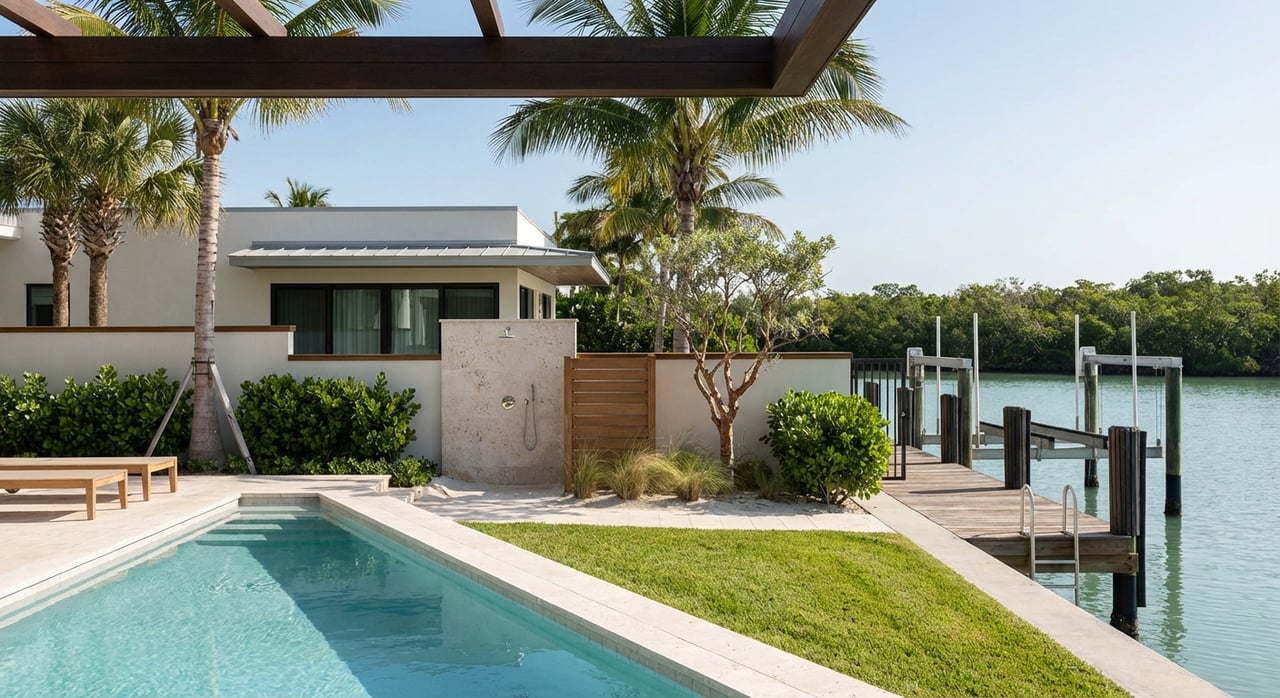
Intracoastal properties offer protected water, calmer conditions, and private docks for boats and water toys. If you value year-round boating, quick access to inland waterways, and dock-based entertaining, the west side often delivers more daily utility. Larger parcels can support generous waterfront amenities.
Dockage and navigation realities
Your actual boating experience depends on water depth, channel conditions, drawbridge clearances, and inlet maintenance. The U.S. Army Corps of Engineers regularly conducts maintenance dredging in the Jupiter Inlet area to keep navigation routes safe. Check current projects and schedules through the U.S. Army Corps (Jacksonville District) update. If your vessel has meaningful draft or height, confirm local bathymetry and bridge data before you bid.
Views and activity
Intracoastal outlooks trade the surf for sunset waterway views. You may see seasonal boat traffic and occasional wakes, yet conditions are usually far calmer than the open ocean. For a feel of the protected-water setting, explore the local harbor context at Jupiter Harbor.
Permits, protections, and environmental rules
Beach Protection District and assessments
The Town’s Beach Protection District funds shoreline and dune projects through a dedicated erosion tax. It is a key line item to review during underwriting and long-range maintenance planning. For program scope and financials, visit the town’s Beach Protection resources.
Coastal construction and seawalls
Florida’s Coastal Construction Control Line (CCCL) program governs construction seaward of the CCCL. Oceanfront work such as dune restoration, walkovers, and some structures often requires permits, biological reviews, and seasonal restrictions. Start with the FDEP’s guidance to apply for a CCCL permit. For shoreline armor and related topics, see FDEP’s Beaches Program. If a property includes seawalls or older coastal structures, make permitting history and engineering reports part of your file.
Sea turtle lighting rules
Sea turtles nest on Jupiter Island’s beaches, and lighting visible from the beach is regulated during nesting season. Expect to use wildlife-friendly fixtures and glazing strategies that keep light low, long-wavelength, and shielded. The Florida Fish and Wildlife Conservation Commission outlines best practices for compliance in its sea turtle lighting guidance.
Flood risk and insurance
Most barrier-island parcels fall within Special Flood Hazard Areas. Obtain an elevation certificate early and price both NFIP and private-market flood coverage along with wind and hurricane policies. Premiums vary based on elevation, construction, mitigation features, and claims history. Factor these carrying costs into your offer strategy.
Which side fits your priorities
- Choose oceanfront if daily beach access, Atlantic sunrise views, and a surf-forward lifestyle are your non-negotiables.
- Choose Intracoastal if boating is central, you want protected dockage, and you prefer calmer water for daily use.
- If you want both, consider large Intracoastal parcels with deeded ocean access or dual-waterfront compounds when available. Pricing can approach oceanfront, but you gain boating utility.
Pre-offer checklist
Before you draft terms, confirm the essentials so you negotiate from strength.
- Verify waterfront type with a current survey and legal description, and confirm any deeded beach access.
- Request an elevation certificate and obtain preliminary flood and wind insurance quotes.
- For boaters, confirm channel depth, bridge clearances, and Jupiter Inlet conditions. Review recent dredging activity through the U.S. Army Corps.
- Request copies of shoreline, dock, seawall, and if applicable, CCCL permits. Confirm whether any state authorizations or submerged-lands leases apply.
- Ask for recent coastal maintenance invoices and for Beach Protection District assessments. Start with the town’s Beach Protection resources.
During inspection and contract period
- Commission full structural and roof inspections with attention to salt exposure. Include pool, HVAC, and exterior finish reviews.
- Engage a marine contractor to inspect docks, lifts, pilings, and seawalls. Clarify whether any necessary dredging is a public project or a homeowner responsibility. Confirm current USACE and local schedules via the U.S. Army Corps.
- Review lighting for sea turtle season and consider certified wildlife-friendly fixtures and window treatments per FWC guidance.
The bottom line
On Jupiter Island, the choice between oceanfront and Intracoastal is about how you want to live every day, balanced with what it takes to protect and maintain your property. Oceanfront gives you the beach at your doorstep and an elemental connection to the ocean. Intracoastal gives you docking, protected water, and sunset views that invite year-round use. With clear priorities and a disciplined due diligence process, you can secure the setting that fits your life.
If you’d like a quiet, expert sounding board as you compare properties, reach out to Susan Turner. Let’s connect on your goals, preview a few contrasting listings, and map the permitting and maintenance steps in advance so your purchase feels seamless.
FAQs
What does private beach access mean on Jupiter Island?
- Florida treats dry sand below the mean high-water line as public, but access points are limited on Jupiter Island; always verify any deeded access and review local rules with the Town of Jupiter Island.
Are oceanfront homes more expensive than Intracoastal on Jupiter Island?
- Often yes, due to private beach frontage and unobstructed views, though very large Intracoastal parcels with deep water and acreage can achieve similar prices; evaluate current, property-specific comps.
How do dredging and inlet conditions affect my boat access?
- Navigation depth and reliability depend on local bathymetry, bridge clearances, and scheduled maintenance; check current projects with the U.S. Army Corps (Jacksonville District).
What permits apply to oceanfront construction or dune work?
- Many activities seaward of the CCCL require FDEP review; start with the CCCL application guidance and FDEP’s Beaches Program before planning design or shoreline work.
What lighting rules apply near the beach during turtle season?
- Expect low, long-wavelength, shielded lighting and possible glass treatments; follow FWC’s sea turtle lighting standards to stay compliant.