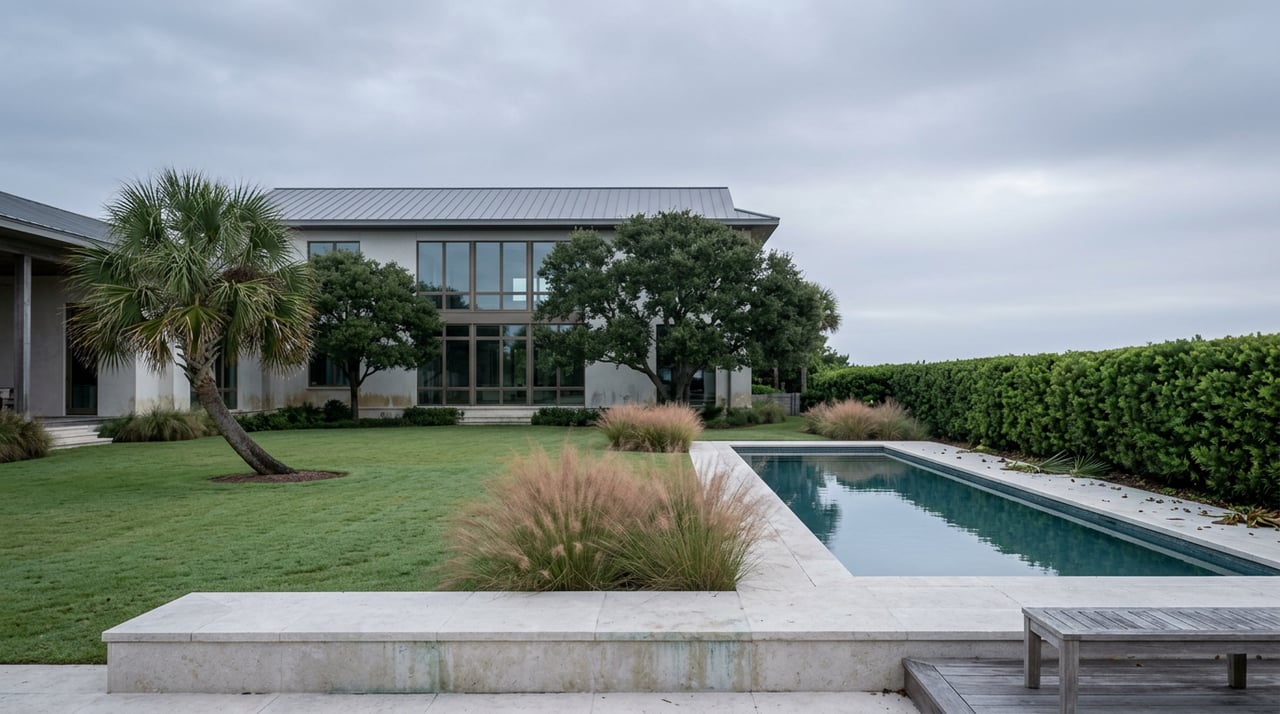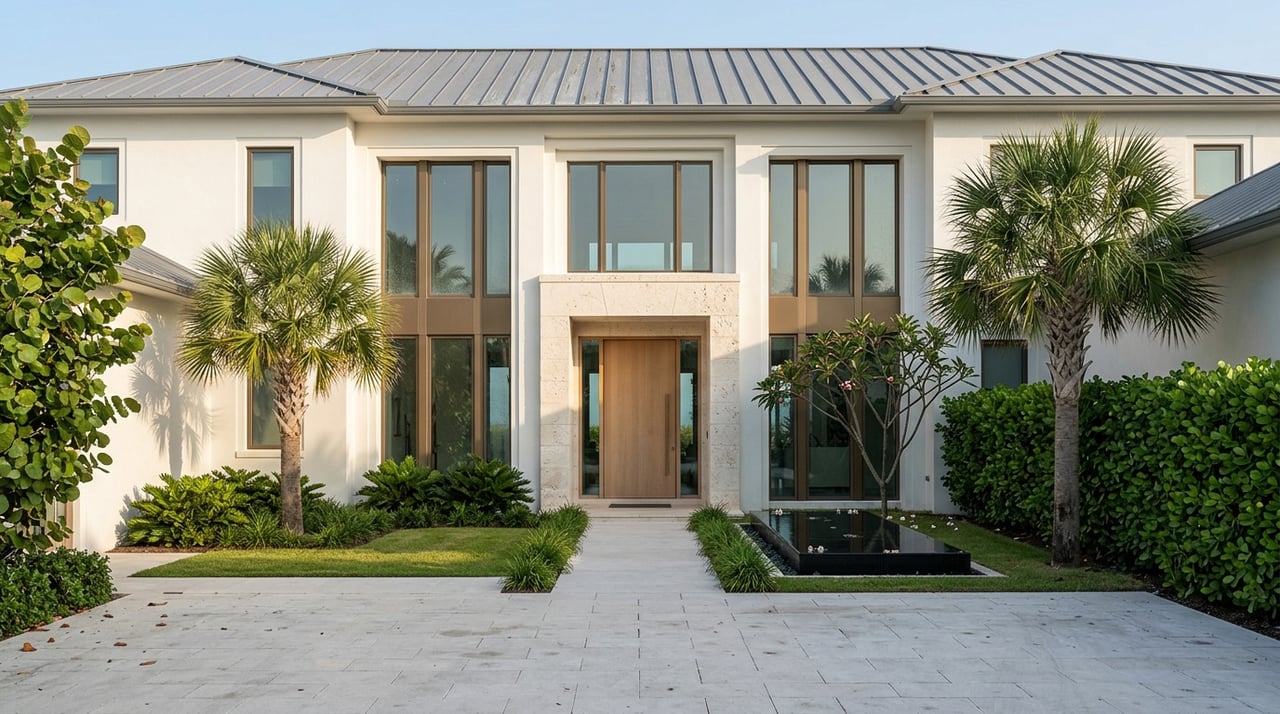
If you are drawn to Jupiter Island, chances are you are noticing more than square footage or waterfront frontage. You are responding to a very specific architectural feeling: private, composed, coastal, and deeply connected to land and water. Understanding that character can help you read the market more clearly, whether you are buying a legacy estate, evaluating a renovation, or preparing a home for sale. Let’s take a closer look.
What Defines Jupiter Island Architecture
Jupiter Island is a barrier island at the south end of Martin County, with about nine miles of ocean frontage on one side and the Intracoastal Waterway on the other. The town describes it as a low-density residential community shaped by preservation and conservation, with roughly 820 permanent residents and nearly 2,000 seasonal residents. That setting alone influences how homes are designed, placed, and experienced.
On Jupiter Island, architecture is not only about style. It is also about privacy, flood resilience, sun control, landscaping, and view corridors. The result is an estate-driven built environment that often feels horizontal, sheltered, and closely tied to outdoor living.
Why the Setting Shapes the Style
The island’s coastal conditions play a major role in its architectural identity. Town review materials ask for details such as floor area, roof height, wall height, finish-floor elevation, and flood zone, which shows how closely design and site planning are connected here. The town also references a 10,000-square-foot principal-dwelling cap and a two-story limit in at least one residential district.
Those rules help explain why many Jupiter Island homes feel substantial yet controlled. Instead of towering forms, you often see lower massing, broad rooflines, carefully framed terraces, and strong indoor-outdoor connections. Landscaping is rarely an afterthought. It often functions like an architectural layer that softens the home, screens views, and supports privacy.
The island also maintains a long-running beach nourishment program, and the town notes that dunes help reduce flooding. In practical terms, that means architecture here must respond to a living shoreline. Homes are shaped by climate and topography just as much as by personal taste.
The Historic DNA of Island Estates
Jupiter Island’s older architectural language comes from its early resort and winter-colony years. Two landmark properties help tell that story. The Gate House at 214 South Beach Road, dating to around 1927, is described in National Register documentation as a Spanish Colonial Revival complex with textured stucco, barrel-tile roofs, arches, a square tower, and tropical planting.
The Mansion at Tuckahoe, completed in 1939, adds a Mediterranean Revival chapter to that legacy. Together, these homes show that Jupiter Island’s roots are tied to romantic coastal architecture with masonry, texture, and garden structure. This is not a place defined only by simple beach houses.
That history still matters today. The town’s planning framework centers future housing on single-family residences that fit community character, while also allowing accessory quarters for guests and employees. That helps explain why many estates read as compounds, with guesthouses, garden walls, arrival courts, and layered outdoor spaces.
Spanish and Mediterranean Influences
If you want to recognize the older architectural lineage on Jupiter Island, a few details stand out right away:
- Stucco exteriors
- Barrel-tile roofs
- Arched openings
- Square towers or tower-like elements
- Garden walls
- Tropical planting woven into the architecture
These homes often feel rooted and timeless. Even when updated, they tend to carry a sense of permanence that fits the island’s long-established estate tradition. For buyers, this style can signal legacy appeal and a strong relationship to the island’s historic character.
For sellers, these details can be an asset when they are preserved thoughtfully. Original architectural cues often help a property stand apart in a market where authenticity and craftsmanship matter.
The Rise of Anglo-Caribbean Influence
While historic Mediterranean forms remain important, contemporary Jupiter Island architecture also includes a strong Anglo-Caribbean or Bermuda-adjacent influence. One featured Intracoastal home on the island was described as Anglo-Caribbean with colonial nuances, using a large hipped roof, a simple five-bay framework, mahogany window frames, shutters, terraces, and a covered porch off the primary suite.
That description captures a style that feels especially natural in this setting. These homes prioritize shade, breezes, symmetry, and easy movement between interior rooms and outdoor living areas. Centered entries, porches, and verandas create a calm, gracious feel that suits both seasonal living and entertaining.
Landscape is part of the look. The same home emphasized native plantings, layered palms, and mature trees, with house and grounds designed as one seamless whole. On Jupiter Island, that relationship between architecture and landscape is often what makes an estate feel complete.
Common Anglo-Caribbean Cues
If you are touring homes or reviewing design plans, look for:
- Hipped roofs
- Shutters
- Porches and covered terraces
- Centered entries
- Repeating bay rhythms
- Strong emphasis on shade and outdoor rooms
These features are not just attractive. They also make practical sense in a coastal climate where comfort often depends on controlling sun and creating sheltered transitions.
Why Modern Architecture Works Here
Jupiter Island is not limited to traditional coastal styles. Modern and post-modern homes also have a place in the market, especially when they respond well to site conditions. One Jupiter Island estate was described as a poured-concrete home on pillars with walls of windows, balconies, a roof deck, and both Atlantic and Intracoastal frontage.
What makes architecture like this successful on the island is not novelty alone. The strongest modern homes here are view-first, climate-responsive, and privacy-conscious. They use glazing, elevation, overhangs, and horizontal lines to frame water, sky, and landscape rather than ignoring them.
In other words, modern design works best on Jupiter Island when it feels grounded in the barrier-island setting. A home that respects light, wind, flood conditions, and private outdoor living will feel more convincing than one that simply imports a generic contemporary style.
Modern Features You May See
A modern Jupiter Island estate may include:
- Deep overhangs or shade frames
- Floor-to-ceiling glass
- Elevated structures
- Broad balconies
- Roof decks
- Strong visual connections to both ocean and Intracoastal views
These elements can create striking architecture, but they also need to be handled with care. On Jupiter Island, restraint often matters as much as ambition.
There Is Room for Expressive Design
Although much of the island’s architecture feels restrained, Jupiter Island can also support more expressive luxury homes. A separate property profile described an oceanfront estate with Art Deco-inspired architecture, a glass staircase, bold decor, a separate guest suite entrance, a cabana, a dock, and water-to-water frontage.
This kind of home shows that the island does not require one narrow aesthetic. There is space for more personality when the design is supported by the site, the scale of the estate, and the overall quality of execution. The key is that the home still feels connected to climate, landscape, and waterfront living.
What Style Feels Most Like Jupiter Island?
The most accurate answer is that Jupiter Island has a coastal luxury spectrum rather than one fixed style. Its architectural character blends resort-era Spanish Colonial Revival and Mediterranean Revival influences with Anglo-Caribbean comfort and carefully considered modern design. Each expression is shaped by the same larger conditions: privacy, preservation, water views, flood awareness, and estate-scale living.
That is why homes on Jupiter Island can look different from one another and still feel unmistakably local. The through-line is not a single facade type. It is a way of building that values discretion, craftsmanship, landscape, and a close relationship between house and setting.
What Buyers Should Notice
If you are buying on Jupiter Island, architectural character matters beyond appearance. It can affect how a home lives day to day, how well it suits the site, and how enduring it may feel over time. Looking closely at design can help you understand whether a property’s value comes only from location or from a more complete estate composition.
As you evaluate a home, consider:
- How the house handles sun, shade, and breezes
- Whether the landscape supports privacy and architecture together
- How indoor and outdoor spaces connect
- Whether guest quarters or accessory structures feel integrated
- How the design responds to water views and elevation needs
These details can tell you a great deal about the thought behind a property. On an island with a tightly defined residential character, that context matters.
What Sellers Should Keep in Mind
If you are selling a Jupiter Island estate, architecture is part of the story buyers are purchasing. A home’s style lineage, materials, outdoor spaces, and landscape composition can shape how it is perceived in the market. That is especially true in a setting where buyers often respond to subtle quality rather than obvious flash.
Thoughtful presentation can help clarify a property’s architectural strengths. For some homes, that may mean highlighting historic details or compound-style planning. For others, it may mean emphasizing modern view corridors, terrace living, or the connection between the residence and the grounds.
This is where design understanding becomes valuable. When a home’s architectural identity is interpreted clearly, buyers can better appreciate what makes it distinctive within the Jupiter Island market.
If you are thinking about buying or selling on Jupiter Island, working with an advisor who understands both the market and the design language of the island can make a meaningful difference. For discreet, design-informed guidance, connect with Susan Turner.
FAQs
What architectural styles are most common on Jupiter Island?
- Jupiter Island is best understood as having a coastal luxury mix that includes historic Spanish Colonial Revival and Mediterranean Revival influences, Anglo-Caribbean or Bermuda-adjacent homes, and select modern or post-modern estates.
Why do Jupiter Island homes often have porches and terraces?
- Porches, terraces, and shaded outdoor rooms fit the island’s coastal climate and support the indoor-outdoor living style seen throughout its estate properties.
Why do some Jupiter Island properties include guesthouses or accessory quarters?
- The town’s planning framework centers single-family residential use and allows accessory quarters for guests and employees, which helps explain the compound-like layout of some estates.
How does the barrier-island setting affect Jupiter Island home design?
- The setting influences elevation, flood awareness, sun control, privacy, landscaping, and how homes frame ocean or Intracoastal views.
Can modern architecture fit the Jupiter Island market?
- Yes. Modern homes can fit well when they respond thoughtfully to climate, privacy, and waterfront views rather than feeling disconnected from the island’s coastal setting.
What should buyers look for in Jupiter Island estate architecture?
- Buyers should pay attention to how the home handles light, shade, views, landscape integration, outdoor living, and overall fit with the site and the island’s established residential character.